THEMATIC READER
Additional Topics
This reader combines 23 shorter encyclopedia entries into one continuous, searchable document. Each original title has a direct link and downloadable source text.
Abudraham
Rav David Abudraham was the author of a halachic guide to the prayers. He succeeded in his goal of composing a work that would reach the masses and further their understanding of the services. He lived in Seville around the turn of the century and was a student of the Baal HaTurim.
Adon Olam
Master of the universe
Anna Roth
Anna Roth, MD was born in Germany, studied Medicine in Germany and received her resident training afterwards in England and in New York. After 09-11 she decided to live in Israel and was working in Poriya Hospital near Tiberias until 04-2005. As Dr. Roth began to recognize the limitations of Western Medicine she decided to study Chinese Medicine with a special interest in Medicine and Kabbala. You can now take advantage of the healing techniques and medical wisdom that Dr. Roth will be presenting in her classes.
Dr. Roth gives classes live from Israel on NoahideNations.com
Approved by GodFearers
To be approved for editing main content send email to one of these addresses:
- [mailto:webmaster@wikinoah.org webmaster@wikinoah.org]
Approved by Wikinoah
To be approved for editing main content send email to webmaster@GodFearers.org, saying "please approve me for edits"
Aruch
Written by Rav Natan the son of Yechiel, who lived in Rome from 1035 until 1106. The Aruch can perhaps be classified as a scholarly Talmudic dictionary, tracing the root of each word and citing the text in which it appears. It draws off of the works of several Geonim and early Rishonim, and was accepted by both Ashkenazic and Sephardic authorities
Baal HaMaor
Rav Zerachyah HaLevi was born in 1135 in Gerona, Spain and passed away in 1186 in Lunel, Provence. His work Sefer HaMaor was written when he was only nineteen years old, and contained his criticisms of the Sefer HaHalachot of Rif. He prefaced this work with comments justifying his ability to criticize Rif despite his young age. This work was heavily attacked, most notably by Ramban in his Milchamot Hashem ("The Wars of The Lord") and by Raavad.
Baal HaTurim
After Mishne Torah, the next major halachic code was Rav Yaakov the son of Asher's Rosh Arba'ah Turim (lit. "four pillars"). He dealt only with the laws that are still relevant, and divided them into four major sections: Orach Chayim, dealing with the daily laws and laws of Shabbat and holidays, Yoreh De'ah, dealing with laws of kashrut, mourning, and niddah, Even HaEzer, dealing with women's issues such as marriage and divorce, and Choshen Mishpat, which deals with the civil code. These divisions became the standards for many later works, and this work remains as the standard source-text for halachic discussions. In addition, he also wrote a brief commentary on the Torah, known as Ba'al HaTurim, which focuses on gematria, as well as a longer commentary. He studied under his father, and was the teacher of Abudraham.
Batbayan-Bezmer
Batbayan-Bezmer was placed in charge of the Cozar People of Bulgarios in Greater Halychyna by Chouvrtou. In 677 the Cozar People of Asparukh and Kotrag revolted. The rest of the Cozar People consolidated their rule around Greater Halychyna as far as Kiev in the East and in the west, Chelarevo where the Cozar People converted to Judaism in the mid 700s.
Batbayan-Bezmer and his descendants after him remained loyal to the Kara-Khazars continuing to pay tribute to Ed 's Hungarian Turks of Azov until the 800s.
The Cozar People were conquered by the Moravians around 800 provoking the Hungarians to take back control.
The Cozar People were ruled by the Aba clan from which descended Bulan.
677-? — the "Kouver" revolts began in Sirmium forcing the Cozar People of Greater Halychyna to give up on Sirmium and withdraw to Chelarevo.
680s the Kubiar tribe of Asparukh conquered Thrace.
690s the Kubiar tribe of Kotrag founded Volga Bulgaria.
Bihar seeks refuge in Greater Halychyna where he becomes grandfather to Leo IV the Khazar.
729/730 ?Surakat?
c.740 Aba's descendant Bulan-Sabriel converted to Judaism by Yitzkhak Sangari.
791-795 Yugurus during another civil war among the Cozar People. Many Bulanids die in Chelarevo as the Moravians begin to expand. The Cozar People retreat to Cuzdrioara.
795-? Kajd Tudun
795—814 — Theodorus
803-? Zodan
814— ? — Abraham (khagan of the Cozar People)
? —835 — Canizauci Tudun
ca. 829 to 838 or 820s–846 Morut/Ratimir/Mojmir I who occupied Carpathia.
830 Batbayan-Bezmer' s descendant Khan-Tuvan Dyggvi and his Kiabars establish the Rus' Khaganate. Bulan's Cozar People will support the Hungarian acquisition of Pannonia because they are being conquered by Morut/Ratimir/Mojmir I who occupied Carpathia.
867 to 894 Svatopluk I of Moravia
894 to 906 Menahem/Mojmir II of Moravia was called Menumorut (Stallion of Morut) by the Hungarians because he had many wives and was called Ben Marot by the People that are called Cozar who inhabited Carpathia.
950 Kiabar Kohen Samson and Jyedi, kyr qereji of Kazár-országa.
https://en.wikipedia.org/wiki/Gagauz_people
Beginning Hebrew Reading for Bnai Noach
The Jewish Language Institute's How Hebrew Works
Want to learn how to read and comprehend Hebrew? Frustrated with your learning options?
Can't find a competent and reliable teacher?
Too difficult to get out to learn?
HowHebrewWorks.com and our Hebrew online learning service is for you. Now you can learn Hebrew conveniently at home, in your office, or at school with an experienced, highly skilled, professional instructor—one-on-one or in a small group, live, and on-time.
Whether you're a first-time Hebrew learner or a current student of this wondrous language, we'll spend the most rewarding, focused, and productive learning time together devoted to your Hebrew learning level and needs.
Through Internet technology, we'll speak, read, discuss, study examples, review, write, practice, and even take short quizzes to solidify your Hebrew learning.
With us, feedback is immediate. And learning is focused on you, so you'll progress in reading, speaking, and writing Hebrew efficiently with no wasted efforts.
To learn with us online, you'll need:
- A computer with a broadband Internet connection;
- A microphone and speakers (we offer excellent choices in our online store);
- Skype, the free Internet telephony software available at www.skype.com;
- A Web browser such as Mozilla Firefox; and
- A PayPal, eCheck, Visa, MasterCard, American Express, or Discover account to pay for your HowHebrewWorks.com session on our payment page.
Opportunity … responsive instructors … latest technology … everything's in place for your Hebrew learning success. Contact us today and let's start learning!
HowHebrewWorks.com: Course "Beginning Hebrew Reading for Bnai Noach"
Behag
Acronym for Ba'al Halachot Gedolot, a Geonic-era halachic work. The authorship of this work is a matter of debate. Some attribute it to Rav Yehudai the son of Shmuel Gaon, who headed the academy in Sura, Babylonia and lived from approximately 820 through 905, while others claim that it was written by Rav Shimon of Kaira.
Bnai Adam
The children or Descendants of Adam
BNN
The articles, information, and links provided on this site do not represent official policies, procedures, or opinions of BnaiNoach.com or any of its operational units. The information on this site have come from a variety of sources, including speeches, articles, tracts, and other presentations, and they have been composed over a period of time, and many are of historic interest, Religion interest, and human affairs interest. Also, writer's inclusion on this site does not imply his full agreement with all of the articles. Each writer is responsible only for his own stated views. Many of the articles on this web site have been included only for the viewers use in the comparison of differing views and beliefs.
BnaiNoach.com realize there is a wide gap in human emotions and beliefs. For clarificatin purposes the main focal point of BnaiNoach.com is conservative. BnaiNoach.com extend our hand to others struggling along life's path seeking for the same true path to G-d.
For the stepping stones from there to here, from then to now, only seek to provide a path for others to step one step closer to G-d. I commend you with all my heart. Welcome and Enjoy our site. Shalom.
Bulan
Bulan was a king of the Khalyzians in Greater Dacia and a descendant of the House of Aba. He was converted to Judaism by Yitzhak Sangari in 740. Many of his Judaic Khalyzians were buried in Chelarevo when Maurot's Slovi began to expand. From him the Bulanids have been named.
Captives
The Bible makes no provision for the treatment of captives taken in war. Captives were considered as slaves, and as such were subject to all the laws that govern the relations between the master and his non-Jewish slave (); (see Slaves). In the early wars of Joshua with the seven tribes that inhabited Palestine, there could be no captives of war, as the Israelites were commanded to destroy all the people, even the women and the children (Deut. xx. 16-18). In later days the descendants of such Canaanites as escaped destruction Solomon considered not only tributary to himself, but also bond-servants who had to serve the Israelites at any time in whatever capacity they might be needed (I Kings ix. 20, 21; Maimonides, "Yad," Melakim, vi. 1).
According to the Deuteronomic law (Deut. xx. 10-18), the Israelites were commanded to destroyall male adults of a conquered people. In some instances, however, Israelitish kings showed unusual mildness to their captives. Ahab released Ben Hadad of Syria on very generous terms, after the latter had suffered a humiliating defeat on the battlefield (I Kings xx. 34). At the instance of the prophet Elisha, the king of Israel dismissed a Syrian army which had been taken by stratagem (II Kings vi. 20-23).
Female captives were also subject to the same laws as the female non-Jewish slaves. A peculiar exception to that general law is the case of the "yefat to'ar" (, Deut. xxi. 10-14). An Israelitish warrior who had intercourse with a captive might take her for a wife, after having permitted her to mourn for her parents a full month. If he then refused to marry her, he could not sell her into slavery, but must let her go free.
In Rabbinical Literature
The Rabbis saw in the law regarding female captives a reluctant concession to the passions of man, and therefore looked upon such an act unfavorably. They treated it as an exception and limited it in the following manner:
One who takes possession of a female captive during war may not cast her off; but, if she be willing to accept the Jewish religion, her captor must keep her in his house for three months, this being the accepted interpretation of "yeraḥ yamim" (Deut. xxi. 13), and then marry her. If at the end of the three months he did not wish to marry her, he must not sell her into slavery, but must send her away free. Should she be unwilling to accept the Jewish faith, he may continue to keep her for twelve months and use peaceful persuasion; but if at the end of that period she is still steadfast in her determination, he must send her away free. At no time may the captor employ compulsory measures to force her into the Jewish faith. If he belongs to the family of Aaron, he can not marry her, as the Jewish law prohibits a Kohen from marrying a proselyte (Yeb. 48b; Kid. 21b et seq.; Maimonides, "Yad," Melakim, viii. 2-7).
Bibliography: Hastings, Dictionary of the Bible, s.v. War; Spitzer, Heer und Wehrgesetz der Alten Israeliten, Griechen und Römer, ch. xix., Vinkovcze, 1879.J. Sr. J. H. G.
Source: JewishEncyclopedia.com: Captives
Categories
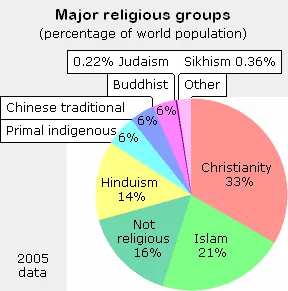
One of the tenets of wikinoah is for each of the 'seventy nations' to define its own national belief in its own words, without putting down other national faiths. It is assumed that each national faith will have its own view on certain ideas and concepts, and these may conflict with each other. The foundation of all proper religion and society being the seven laws of noah. In wikinoah, loosely following wikipedia.org and beliefnet.org, each faith is given its own category and symbol. If the page is dedicated entirely to one faith then simply marking its category is sufficient, however if a single page represents multiple views then each section should be marked by a small 64x64 icon.
Quick Links
- List of all categories
Approach to Noahidism (A-Z)
For main article, see Approaches
- Rabbi Benamozegh's Approach
- Chabad Approach
- Oath Brit Approach
- Rambam Approach
- Rabbi Soloveitchik's Approach
- Tosafists Approach
Noahide and Jewish Courts (A-Z)
- Jerusalem Court for Bnei Noah
- Rulings of Lubavitcher Rebbe
Relgions (A-Z)
For informational purposes only.
- Baha'i Religion
- Buddhism Religion
- Christian Religion
- Catholic Religion
- Christian Science Religion
- Druze Religion
- Eastern Orthodox Religion
- Latter-day Saints Religion
- Protestants Religion
- Evangelical Religion
- Mainline Religion
- Progressive Religion
- Quaker Religion
- Falun Gong Religion
- Hinduism Religion
- Islamic Religion
- Jainism Religion
- Judaism Religion
- Nation of Islam Religion
- Petrine Sabianism — Theosebeia/Seboghatullah
- Sabaean Religion — Saabi`ah Mushrikoon
- Sabian Religions — Saabia`ah Hunafa`
- Shinto Religion
- Sikhism Religion
- Taoism Religion
- Unitarian Universalist Religion
- Zoroastrianism Religion
Noahide
Noahides who follow the Rambam Approach declare all existing religions invalid by definition. For these, only this category is valid.
- Noahide Religion
Noahide variants
For main article, see The 70 Gates, an attempt to define all seventy religions based on Rabbi Benemozegh's approach.
- Noahide Christian Religion
- Noahide Eastern Catholic Religion
- Noahide Western Catholic Religion
- Noahide Protestant Religion
- Noahide Evangelical Religion
- Noahide Pentecostal Religion
- Noahide Charismatic Religion
- Noahide Islamic Religion
- Noahide Sunni Religion
- Noahide Shiite Religion
- Noahide Druze Religion
- Noahide Baha'i Religion
- Noahide Hindu Religion
- Noahide Buddhist Religion
- Noahide Shinto Religion
- Noahide Zoroastrian Religion
- Noahide Rastafarian Religion
ChaGaT
The name ChaGaT refers to three intellectual Sefirot (Divine Emanations) which comes from 10 Sefirot which form the Tree of Life.
Cha - (04. Chesed (Mercy; חסד) Ga - (05. Gevurah (Severity; גבורה) T - 06. Tiphareth (Redeemer; תיפארת)
The 10 names of the Sephirot are:
01. Kether (Crown; כתר) 02. Chochmah (Wisdom; חכמה) 03. Binah (Understanding; בינה) 04. Chesed (Mercy; חסד) 05. Gevurah (Severity; גבורה) 06. Tiphareth (Redeemer; תיפארת) 07. Netzach (Victory; נצח) 08. Hod (Majesty; הוד) 09. Yesod (Foundation; יסוד) 10. Malkhuth (Kingdom; מלכות)
Occasionally another is enumerated: Da'at (Knowledge; דעת)
Chatam Sofer
Rav Moshe Sofer (Schreiber) was born in 1763 in Frankfurt. He is generally considered to be the leader of the third strain of Judaism during the enlightenment era. While the Neo-Orthodox sought to engage the maskilim (enlighteners) and to directly combat them, Sofer adopted the view of "Chadash assur min HaTorah" - all that is novel (in this case, in religious practice), is forbidden by the Torah. His main work is a collection of his responsa, encompassing several volumes, and he also authored a commentary to the Shulchan Aruch. His students included his son, known as the Ktav Sofer. He passed away in Pressburg in 1840.
Chouvrtou
Chouvrtou or Kuvrt or Kuvrat was a leader of the Kazarig tribe and was named as the Patrician of the Kubiar generals who pacified the Cozar People. Three of his Kubiar generals' tribes eventually rejected the rule of the Kara-Khazars and established their own realms.
Current events
To see current events about the Bnei Noach community see one of these resources
Recent Media Coverage June 2007
Daniele Massimi
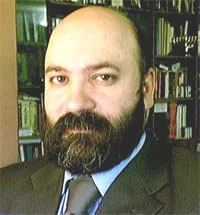
Daniele Massimi (Daniel Aharon ben Noah) maked the Sito_Noachide_%28Italian_Website%29 in 2006 to develop the tradition of Bnei Noach movement in Italy.
Informazioni biografiche
He was born on 26 of April 1969 in Rome.
He "was living" with the roman chattolic religion. Five years ago he decided to come back to the origin of the original tradition and becomed in his heart noahide thanks to the book of Elijah Benamozegh, Israel and Humanity. For this reason he chosed the name "Daniel Aharon ben Noah" to be a brother of Israel and a son of Noah.
He is a multimedia architect, graphic designer and web site maker.
David Davis
J. David Davis, a former ordained Baptist Minister, graduated from Tennessee Temple University of Chattanooga in 1972. Hired as Pastor of the Emmanuel Baptist Church of Athens in Tennessee, Mr. Davis and his congregants set out on a long and difficult journey seeking further knowledge, not of the “World as it is” but about the “Why” of the world. It was during this process of exploration that Mr. Davis discovered that people of all backgrounds want to relate to God without fear or condemnation. This study led to his discovery of one of the most fundamental, yet obscure, doctrines of biblical and ancient Hebrew tradition, “The Seven Universal Laws of Noah.”
David Sears
David Sears directs the New York-based Breslov Center for Spirituality and Inner Growth. He is the author of several books, including The Tree That Stands Beyond Space: Rebbe Nachman of Breslov on the Mystical Experience, The Path of the Baal Shem Tov and Compassion for Humanity in the Jewish Tradition. A skilled artist, he has also written and illustrated a number of Jewish children’s books, including Rebbe Nachman’s mystical allegory, The Lost Princess.