THEMATIC READER
Additional Topics · Part 2
This reader combines 23 shorter encyclopedia entries into one continuous, searchable document. Each original title has a direct link and downloadable source text.
Doug Taylor
Doug Taylor began his Noahide journey in 1989 on an archaeological dig in Israel. Having stepped away from organized Christianity some 19 years earlier, he had been on a continual hunt for truth. During his time in Israel, a friend handed him a copy of The Path Of The Righteous Gentile. Doug later described it this way. “As I read it, it was like the tumblers of a lock finally falling into place. It answered questions I’d had for years. I could hardly put it down.”
Returning to his native Seattle, Doug sought out rabbis who would teach him Torah from a rabbinic perspective. Ultimately, he came into contact with Rabbi Israel Chait, the Rosh Yeshiva of Yeshiva B’Nei Torah in Far Rockaway, NY. Through a Noahide tape series given by Rabbi Chait, Doug began to build a solid foundation of Torah understanding. At the same time, Rabbi Chait connected Doug with Rabbi Morton Moskowitz, the Rosh HaYeshiva of Northwest Yeshiva High School on Mercer Island, WA. Rabbi Moskowitz began tutoring Doug in Jewish philosophy through the study of Proverbs. Doug has been learning with Rabbi Moskowitz and other rabbis for the past 16 years.
Together, Rabbi Moskowitz and Doug co-authored a series of short stories based on Torah principles of rational thinking for a local newspaper. Those articles are now available as an e-book called Getting It Straight; Practical Ideas For A Life Of Clarity. Doug has spoken in Jewish high schools, at shabbatons, and other venues regarding Torah principles, Noahides, and how Noahides approach living a Torah life.
A Fellow of the Society of Actuaries, Doug is the Global Director of Quality for a worldwide actuarial and human resources consulting firm. He has co-authored two books, and is working on a third. A highly rated speaker and presenter, Doug enjoys learning, teaching, time with his family, and is an expert at avoiding yard work.
Edu
Ed was the Iverian son of Csaba and the ancestor of the Hungarians. His story was confused in the Җәгъфәр тарихы propaganda with the story of his brother's descendants Batbayan-Bezmer and Kotrag. He was the ancestor of Ugyek and Almos who ruled in Bashkortostan.
Edumer
Edemen refers to the Malkar (Maghar) brother of Ed and son of the Dulo clan's Csaba and his Hvarezmi wife. He was the father of Bulgarios, Kazarig and Onogundur who brought large numbers of Cozar People into Europe when they restored Hun rule in Romania, Ukraine and Adygea following the eviction of their father Ernak/Csaba from Europe. In Europe the Cozar People were known as Avars. Sandilch's Adygeans submitted to the Gokturks and were incited against their Kazarig brethren who acted in concert with Bulgarios. The Kazarigs eventually submitted while Bulgarios the ruler of the the Pannonian Cozar People did not submit to the Gogturks since they considered that he had appointed himself the title of "Avar Chagan" without their permission.
The name Edemen refers to the unique Romanized character of this nation which distinguished it from other Huns.
El-him
In Kabbalah, the Name El-him (pronounced Elokim) is generally associated with the sefirot of gevurah (the power which complements chesed, whose Name Kel is composed of the first two letters of Elokim).
In the idiom of the sages, God's Name Elokim corresponds to His "property of strict judgment." This is the only Name explicit in the Torah 's initial account of Creation. Elokim = 86 = "hateva" ("nature"). Elokim creates "nature" through the act of tzimtzum (apparent withdrawal or contraction of God's infinite light).
In particular, the Name Elokim manifests itself at three points of the sefirotic configuration: At the level of binah, the four letter Tetragrammaton is punctuated with the vowels of Elokim and enunciated as Elokim. Here God is referred to as Elokim Chayim ("the living God"), the ultimate source of all lifeforce which flows (as blood) through reality. At this level, even apparent contradictory opinions of our sages are understood as being "these and these the words of the living God." God, in His strict judgment of Creation, corresponds to the manifestation of Elokim at the level of gevurah. God, as the inner essence of nature and its laws, is Elokim at the level of malchut.
Elokim, 86 = 26 (Havayah ) plus 60. 60 = kli, "vessel." Thus Elokim is understood to be the vessel of Havayah. This is alluded to in the verse "for [as the] sun and [its] shield are Havayah [and] Elokim" (Psalms 84:12). Sun and shield are as light (source) and vessel. Likewise, 86 (Elokim) plus 60 (vessel) = 146 which = olam, "world." This indicates that just as Elokim is the vessel of Havayah (i.e. the level of Divinity whose ultimate intention is to serve to reveal Havayah to the world), so is the world itself the vessel of Elokim (i.e. the Divinely created context in which nature itself is experienced as a manifestation of God).
In at-bash, the Name Elokim transforms to tav, kaf, tzadik, mem, yud which = 560. 560 is also the value of the word echad, "one," when transformed by at-bash (to tav, samech, kuf). This teaches us that God's ultimate unity is manifest throughout creation by the power of His Name Elokim, as is indicated by the quintessential proclamation of Jewish faith: "Here O' Israel, Havayah is our Elokim, Havayah is One." This means that by Havayah being "our Elokim," Havayah becomes manifest throughout creation as One.
The Name Elokim possesses three "full spellings," 291, 295, 300, which = 886. Together with the four primary "full spellings" of Havayah, which = 232, 232 plus 886 = 1118, the exact value of "Here O' Israel, Havayah is our Elokim, Havayah is One," the least common multiple of the two Names Havayah and Elokim (1118 = 26 times 43; 1118 = 86 times 13)!
Etelköz
Etel-Köz was the Szekely land of the Ugrian Közari which was ruled by the Bulanids Jews.
Etel-Köz was established by the Akötziri "Huns" who remained in the Carpathians after Etel's son Csaba the Hun left for the Wild Fields in the 5th century.
Etel-Köz fell under the rule of Edemen's Avar-Bulgars in the 6th century only to be crushed by the Utigurs of his brother Ed from the Wild Fields. Hence it was ruled by Kubrat's Kubiars in the 7th century before the Kubiar Civil War of 677 when Ed's Hungarians fled to the Dniestr (some, allegedly, even as far as the Volga) and Etel-Köz gained independence.
In the 8th century Etel-Köz's Kahan Bulan was converted to Judaism by Yitzhak Sangari. Under the Bulanids, the Székely Közari of Etel-Köz expanded westward forcing Edemen's Kubiars into Croatia and leaving Közar graves in Chelarevo and other Közar traces in Crisana such as Satmar.
Etel-Köz entered into a friendly alliance with the Hungarian Cowari of the Dniestr in the 9th century to liberate those Székely Közari in the west who had fallen under the rule of the Mojmirids. After helping the Hungarians settle in Pannonia, only a tiny remnant of Ugrians known as the Csangos remained behind in Moldavia where they were eventually converted to Catholicism by the Cuman Diocese.
Etel-Köz only survived as an independent Judaic kingdom in alliance with Hungary until the 11th century but continued to be the main base for Székely Sabbatarians until the Shoah. Its last stronghold was flooded by Ceaușescu in 1989.
Eugene Narrett
Professor Eugene Narrett earned his BA, MA and PhD degrees from Columbia University in NYC. He has been teaching at Colleges and Universities for 28 years. He has taught, designed, created and directed many Liberal Arts courses and programs in fields including Art, Art History, History, Literature and Philosophy. His wide-ranging knowledge of history and his ability to integrate disciplines provides a comprehensive overview and rare insights into the most challenging conflicts and currents of our times. He has published extensively on American politics and culture and on geopolitics and the Middle East. He is the author of three books: Gathered against Jerusalem: Essays on a False Peace; Israel Awakened: a Chronicle of the Oslo War; and Israel and the Endtimes: writings on the logic and surface turbulence of History (2006).
You may visit Dr. Narrett's web site at http://www.IsraelEndTimes.com.
Professor Narrett is also available to lecture.
Gibborim
Children of Geb
Y-DNA Haplogroup E-M215
Hagarenes These were the Meditid Afroasiatic race of Geb/Lotan son of Seir/Shu/Anu/Uranus/Caelus. The Gibborim came from Dilmun to Punt land then the East Mediterranean and eventually even settled in parts of Tartary. Their Empire was torn apart in the Titanomachy known to Josephus as The Ethiopian Wars which took place as Moses led the Israelites out of Egypt. Indeed the followers of Moses are called Gibborim in Exodus 12:37. They were generally called Aamu by the Egyptians which is certainly an attempt to render the term they used to refer to themselves, i.e. אומה or אומות. Only Oceanus/Ea and the Brotherhood of Jupiter stood in opposition to his Titanic Horus brethren after Seth was castrated.
See
- Geb/Polus Ancient-Libyans (E-Z827)
- Iapetus/Nafetuh (E-M81)
- Seth/Petrus father of Gigantes (E-Z830) as well as Horus/Cronus Horites (extinct)
- Oceanus/Enki Cassiopeians/Lycia/Caslukim (E-A929) whence came Inachus/Anak Pelasgians/Philistim (E-M183)
- Jupiter Kaftorim (E-M34)
http://www.dnaarab.com/imgcache/2/1034alsh3er.png
GodFearers (it)
Benvenuti a WIKINOAH IT
Informazioni sui "Bnei Noach" (figli di Noè).
Queste sono alcune traduzioni in italiano dell'Encyclopedia on line sul movimento Noachide creato da Noachidi osservanti ed ebrei.
Indice
<table border="0" cellpadding="2" cellspacing="2" width="100%"> <tr> <td style="vertical-align: top;">
Storia
- Origini
- Le settanta nazioni
- Storia
- Sviluppi recenti
Legge
- Definizione di Noachide
- Le sette leggi
- Dettagli sulle sette leggi
- Legge ebraica - Halakha
- Leggi Noachidi
- Altri sistemi legali
</td> <td style="vertical-align: top;">
Comunicazioni tra fedi
- Ottica ebraica della diversità religiosa
- Cos'è un Ger Toshav
- Cos'è un Ger Tzedek
- Altre religioni potenzialmente Noachidi
- Islam e Leggi Noachidi
- Cristianità e Leggi Noachidi
Risorse
- Collaboratori a WIKINOAH IT
- Gruppi e Mailing list
- Pubblicazioni
- Siti web
</td> </tr> </table>
Altre Informazioni
- Pagine in allestimento
HaKodesh
HEBREW Transliteration HaKodesh
ENGLISH Translation The Holy
HaMashiach
The Jewish Concept of Messiah and the Jewish Response to Christian Claims
1) The word “Messiah” is an English rendering of the Hebrew word “Mashiach”, whose translation is “Anointed”. It usually refers to a person initiated into G-d’s service by being anointed with oil. (Having oil poured on his head. Cf. Exodus 29:7, I Kings 1:39, II Kings 9:3).
2) There are many Messiahs in the Bible. Since every King and High Priest was anointed with oil, each may be referred to as “an anointed one” (a Mashiach or a Messiah). For example: “G-d forbid that I [[David] should stretch out my hand against the L-rd’s Messiah [[Saul]...” I Samuel 26:11. Cf. II Samuel 23:1, Isaiah 45:1, Psalms 20:6.
3) The Hebrew word “HaMashiach” (lit. the Messiah) describing a future anointed person to come does not appear anywhere in the Bible. Since the Bible makes no explicit reference to the Messiah, it is unlikely that it could be considered the most important concept in the Bible. Indeed, in Jewish thought, the Messianic idea is not the most crucial. However, in Christian thought, the Messiah is paramount- a difficulty in light of its conspicuous absence from scripture.
4) Where does the Jewish concept of Messiah come from? One of the central themes of Biblical prophecy is the promise of a future age of perfection characterized by universal peace and recognition of G-d. Isaiah 2:1-4; Zephaniah 3:9; Hosea 2:20-22; Amos 9:13-15; Isaiah 32:15-18, 60:15-18; Micah 4:1-4; Zechariah 8:23, 14:9; Jeremiah 31:33-34.
5) Many of these prophetic passages speak of a descendant of King David who will rule Israel during the age of perfection. Isaiah 11:1-9; Jeremiah 23:5-6, 30:7-10, 33:14-16; Ezekiel 34:11-31, 37:21-28; Hosea 3:4-5.
6) Since every King is a Messiah, by convention, we refer to this future anointed one as The Messiah. The above is the only description in the Bible of a Davidic descendant who is to come in the future. We will recognize the Messiah by seeing who the King of Israel is at the time of complete universal perfection.
7) The Bible never speaks about believing in the Messiah. Because his reign will be an historically verifiable reality, self-evident to any person, it won’t require belief or faith.
8) Because no person has ever fulfilled the picture painted in the Bible of this future King, Jewish people still await the coming of the Messiah. All past Messianic claimants, including Jesus of Nazareth, Bar Cochba and Shabbtai Tzvi have been rejected.
9) The claim that Jesus will fulfill the Messianic prophesies when he returns does not give him any credibility for his “first” coming. The Bible never speaks about the Messiah returning after an initial appearance. The “second coming” theory is a desperate attempt to explain away Jesus’ failure. The Biblical passages which Christians are forced to regard as second coming (#5 above) don’t speak of someone returning, they have a “first coming” perspective.
10) According to Biblical tradition, Elijah the prophet will reappear before the coming of the Messiah (Malachi 4:5-6). In the Greek Testament, Jesus claims that John the Baptist was Elijah (Matthew 11:13-14, 17:10-13). However, when John the Baptist was asked if he was Elijah, he denied it (John 1:21). The Gospel of Luke 1:17 tries to get around this problem by claiming that John the Baptist came in the spirit of Elijah. However:
a] Malachi predicted that Elijah himself would return, and not just someone coming in his spirit.
b] When asked about his identity, John the Baptist didn’t claim to have come in the spirit of Elijah - he claimed no association with Elijah at all.
c] The prophesy about the return of Elijah says that he would restore the hearts of the fathers to their children, and the hearts of the children to their fathers. There is no evidence that John the Baptist accomplished this.
11) According to the Jewish Bible, the Messiah must be a descendent of King David. (Jeremiah 23:5, 33:17; Ezekiel 34:23-24) Although the Greek Testament traces the genealogy of Joseph (husband of Mary) back to David, it then claims that Jesus resulted from a virgin birth, and, that Joseph was not his father. (Mat. 1:18-23) In response, it is claimed that Joseph adopted Jesus, and passed on his genealogy via adoption.
There are two problems with this claim:
a) there is no Biblical basis for the idea of a father passing on his tribal line by adoption. A priest who adopts a son from another tribe cannot make him a priest by adoption;
b) Joseph could never pass on by adoption that which he doesn’t have. Because Joseph descended from Jeconiah (Mat. 1:11) he fell under the curse of that king that none of his descendants could ever sit as king upon the throne of David. (Jeremiah 22:30; 36:30).
To answer this difficult problem, apologists claim that Jesus traces himself back to King David through his mother Mary, who allegedly descends from David, as shown in the third chapter of Luke. There are four basic problems with this claim:
a] There is no evidence that Mary descends from David. The third chapter of Luke traces Joseph’s genealogy, not Mary’s.
b] Even if Mary can trace herself back to David, that doesn’t help Jesus, since tribal affiliation goes only through the father, not mother. Cf. Num. 1:18; Ezra 2:59.
c] Even if family line could go through the mother, Mary was not from a legitimate Messianic family. According to the Bible, the Messiah must be a descendent of David through his son Solomon (II Sam. 7:14;
I Chron. 17:11-14, 22:9-10, 28:4-6) The third chapter of Luke is useless because it goes through David’s son Nathan, not Solomon. (Luke 3:31)
d] Luke 3:27 lists Shealtiel and Zerubbabel in his genealogy. These two also appear in Matthew 1:12 as descendants of the cursed Jeconiah. If Mary descends from them, it would also disqualify her from being a Messianic progenitor.
If you have questions about what Judaism has said about the promised Messiah for the last three millenia or want to know how to answer the Christian claims, please check out our website: www.jewsforjudaism.org, drop us a line or give us a call. The concept of Messiah is Jewish. To find out about it go to the source.http://www.jewsforjudaism.org/web/faq/general-messiah-jewishresponse.html\
Harranians
The Sabians of Harran, a sect of Hermetists, often confused with the Mandaeans. As star-worshippers, Sabians showed a great interest in astronomy, astrology, magic and mathematics. This sect lived in the vicinity of the main center of the Caliphate until 1258, when the Mongols destroyed their last shrine. During Muslim rule, they were a protected minority, and around the time of al-Mutawakkil's reign their town became a center for philosophical, esoteric and medical learning. They were joined by the descendants of pagan Greek scholars who, having been persecuted in Europe, settled in lands that became part of the Abbasid caliphate. The Muslims were greatly interested in Greek culture and science, collecting and translating many ancient Greek works in the fields of philosophy and mathematics. Although they later became Arabic speakers, in pre-Islamic times, it was common for Sabians to speak Greek.
Christianity and Sabianism
Harran was a centre of Christianity from early on, the first place where purpose-built churches were constructed openly. However although a bishop resided in the city, many people of Harran retained their ancient pagan faith during the Christian period and thus the Sabian culture was born here in Harran.
Islamic Harran
At the beginning of the Islamic period Harran was located in the land of the Mudar tribe (Diyar Mudar), the western part of northern Mesopotamia (Jazira). Along with ar-Ruha' (Edessa, present day Urfa) and ar Raqqah it was one of the main cities in the region. During the reign of the Umayyad caliph Marwan II Harran became the seat of the caliphal government of the Islamic empire stretching from Spain to Central Asia.
It was allegedly the Abbasid caliph al-Ma'mun passing through Harran on his way to a campaign against Byzantium who forced the Harranians to convert to either one of the 'religions of the book', meaning Judaism, Christianity or Islam. The people of Harran identified themselves with the Sabians in order to fall under the protection of Islam. Sabians were mentioned in the Quran but those were a group of Gnostic Mandaeans living in southern Iraq, but extinct at the time of al-Ma'mun. The Harranian Sabians and the ones mentioned in the Quran have nothing in common.
Islam's first university
During the late 8th and 9th century Harran was a centre for translating works of astronomy, philosophy, natural sciences and medicine from Greek to Arabic, bringing the knowledge of the classical world to the emerging Arabic speaking civilization. Baghdad came to this work later than Harran. Many important scholars of natural science, astronomy and medicine originate from Harran, including possibly the alchemist Geber.[1]
The end of the Sabians
In 1032 or 1033 the temple of the Sabians was destroyed and the urban community extinguished by an uprising of the rural starving 'Alid-Shiite population with impoverished urban Muslim militias. In 1059-60 the temple was rebuilt into a fortified residence of the Numayrids, an Arab tribe assuming power in the Diyar Mudar (western Al-Jazira, Mesopotamia) during the 11th century. The Zangid ruler Nur al-Din Mahmud transformed the residence into a strong fortress.
The Crusades
During the Crusades, on May 7, 1104 a decisive battle was fought in the Balikh valley, commonly known as the Battle of Harran. However, according to Matthew of Edessa the actual location of the battle lies two days away from Harran. Albert of Aachen and Fulcher of Chartres locate the battle ground in the plain opposite to the city of ar Raqqah. During the battle, Baldwin of Bourcq, count of Edessa, was captured by Seljuq troops. After his release Baldwin became king of Jerusalem.
At the end of 12th century Harran served together with ar-Raqqah as residence of Ayyubid princes. The Ayyubid ruler of the Jazira, al-'Adil Abu Bakr, again strengthened the fortifications of the castle. In the 1260s the city was completely destroyed and abandoned during the Mongol wars. The father of the famous Hanbalite scholar Ibn Taymiyah was a refugee from Harran, settling in Damascus. The 13th century Arab historian Abulfeda describes the city in ruins.
References and notes
- http://www.1911encyclopedia.org/Geber
HaShem
Ha • Shem — Hebrew, Definite Article, "The Name". Refers to the Hebrew tetragramaton (yod, heh, vav, heh,). Most often utilized in place of a name of G-d; and allows the speaker to not have to use a recognized name of G-d in vain.
Jack Saunders
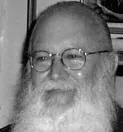
Jack E. Saunders, who began his professional career as a Baptist pastor, is the president and lector (principal teacher) of Frazier's Chapel, a Noahide center near Cleveland, Tennessee - just outside Chattanooga. A leading figure in the modern Noahide movement, he and Dr. Michael Dallen founded the First Covenant Foundation together. He currently serves as co-chair and trustee. A devout student of Scripture and Torah, a teacher, essayist and lecturer, he has introduced hundreds of students to the reality of the First Covenant and to loving observance of its principles.
External Links
- 1stCovenant.org & RainbowCovenant.org: The First Covenant Foundation Michael Dallen, a longtime writer and attorney, Jack E. Saunders, who began his professional career as a Baptist pastor, and Rabbi Michael Katz provide a wide variety of information on the Noahide Covenant, which they also call the Rainbow Covenant or Universal Covenant.
James D. Long

James (Jim) D. Long former member of the High Council of B'nei Noah, Author, Director, Co-owner/Operator Lightcatcher Productions, Publisher--Lightcatcher Books and radio personality.
Radio
Born in Swinton, Missouri, Long began his broadcast career as a disc jockey for his hometown radio station before graduating from High School. During the next 10 years, he worked as a journalist and program director in a number of cities including Houston and Dallas. In addition to being a favorite on-air personality, he is an energetic, creative writer-producer. Long earned a number of awards including three “Addys” from the world’s largest advertising competition (American Advertising Federation).
Long combined his love of archaeology, writing and film-making in 1979, shooting 16mm documentary footage in the mountains of Chihuahua, Mexico, the arid deserts of Jordan and the misty Andean foothills of Ecuador in South America. His first foray into feature films was as Creative Director for Houston-based MediaPlex Entertainment.
Middle East Adventures
He relocated to Dallas in the 1990s and returned to broadcasting. There, he interviewed Professor Vendyl Jones and was so impressed with his scholarship and unique perspective on archaeology and the Bible that Long began working with the Vendyl Jones Research Institutes. He wrote and directed two documentaries, Digging Up the Future and Return to Gilgal, and participated in several archaeological excavations in the Middle East, documenting them on film and video.
Long and his wife, Carol, met in Dallas, Texas and were later married on a dig in Israel, at the Cave of the Column on the shores of the Dead Sea. They later founded Lightcatcher, a publishing and film production company.
Film
Long co-produced Search for the Ark of the Covenant for Fox-Lorber’s Quest Series, which aired on the BBC and Dutch Television. While working on their own projects, James and Carol, shot on location in Israel, Egypt, Jordan and England. Their footage was later featured in Giants: The Myth & the Mystery, seen on The Learning Channel; Gold!, a mini-series on the History Channel; Pax Television’s Encounters with the Unexplained, Discovery Channel International’s Secrets of the Holy Land and Science of the Bible, a National Geographic television series.
Under the Lightcatcher banner, Long has written and directed On the Wings of Ezekiel and Riddle of the Exodus. The latter documentary is based on his book of the same name and offers evidence for the Biblical Exodus based on the Archaeological records of Egypt and ancient Jewish sources. Following the release of the book and DVD version, James was invited to lecture on the subject of the Exodus in venues across the US, as well as England, Israel and Canada.
Long's latest documentary project, Treasures of the Copper Scroll, details the discovery of an ancient metal scroll in a cave at Qumran, along the shores of Israel's Dead Sea, in 1952. Treasures of the Copper Scroll and Riddle of the Exodus are official entries in the 2nd Annual Monaco Charity Film Festival in Monte Carlo.
High Council of B'nei Noah
Long and nine other men gathered in Israel to form the High Council of B'nei Noah on January 10 2006. Long was appointed as the Council's speaker and public relations expert. James served in that capacity until his resignation from the council in January of 2007.
External Links
James D. Tabor
DR. JAMES D. TABOR, author of Things Unutterable, which is about the mysticism of the apostle Paul, is co-author of both A Noble Death, which discusses suicide and martyrdom in antiquity, and Why Waco? Cults and the Battle of Religious Freedom in America. He is a leading scholar on the Dead Sea Scrolls, on the Second Temple period, and on the origins of Christianity. Dr. Tabor also serves as Chief Editor of the Original Bible Project. He is currently working on his newest book, The Jesus Dynasty; A New Historical Investigation of Jesus, His Royal Family, and the Birth of Christianity.
Judah David Eisenstein
Julius (Judah David) Eisenstein (November 12, 1854–May 17, 1956) (יהודה דוד אייזענשטיין) was a Polish Jews-American writer born in Międzyrzec Podlaski, a city in Biała Podlaska County, Lublin Voivodeship, Russian Poland. While in Poland, he was educated in Talmud by his grandfather, Azriel Zelig. Julius emigrated in 1872 to the United States at the age of 17, settled in New York City, and married the following year. He became a successful businessman, but lost much of his fortune in a failed effort to establish an agricultural colony for Jewish immigrants in New Jersey.
Eisenstein was a lover of the Hebrew language, and established America's first society for the Hebrew language, called Shocharei Sfat Ever. He was also the first to translate into Hebrew and Yiddish the Constitution of the United States (New York, 1891). Other early writings of his are Ma'amare Bamasoret, ib. 1897, and The Classified Psalter (Pesuke de-Zimrah), Hebrew text with a new translation (1899). He also made an attempt to translate and explain a modified text of the Shulhan 'Arukh.
Eisenstein took a prominent part in the controversy concerning the Kolel America, a society for the collection of funds for the poor Jews of Palestine, and was one of the leaders in the movement to arrange that the money contributed in the United States should go primarily to former residents of America. In Ha-Modia' la-Hadashim (New York) for 1901 he published, under the title Le-Dorot Gole Russiya be-America, a sketch of the history of Russo-Jewish emigration to America. His History of the First Russo-American Jewish Congregation appeared in No. 9 of the Publications of the Am. Jew. Hist. Soc., 1901.
Primary Works
Julius Eisenstein contributed more than 150 entries to the 1901–1906 Jewish Encyclopedia, from which the above biography was taken, and he authored thousands of articles in newspapers, journals, encyclopedias, and anthologies. His memoirs are contained in a 1929 volume called Otzar Zikhronotai (אוצר זיכרונותי). Others of his works, most of which can be downloaded at HebrewBooks.org are as follows:
- Ozar Perushim we-Ziyurim (1920) (אוצר פירושים וציורים להגדה של פסח), an illustrated Passover haggadah
- Ozar Dinim u-Minhagim (1938) (אוצר דינים ומנהגים), a digest of Jewish laws (halachah) and customs (minhaggim)
- Ozar D'rushim Nibharim (1918) (אוצר דרושים נבחרים), an anthology of midrashic literature
- Ozar Maamare Hazal (1947) (אוצר מאמרי חז"ל), a Concordance (publishing) of rabbinical quotations, sayings, and phrases
- Ozar Ma'amare Tanakh (1947) (אוצר מאמרי התנ"ך), a concordance of words, phrases, and idioms in the Tanakh
- Ozar Masa'oth (1926) (אוצר מסעות), an anthology of itineraries by Jewish travelers to Palestine, Syria, Egypt, and other countries
- Ozar Midrashim (1915) (אוצר מדרשים), a library of 200 minor midrashim
- Ozar Wikuhim (1928) (אוצר ויכוחים), a collection of polemics and disputations
- Ozar Yisrael (principal editor, 1906–1913, 10 volumes) (אנציקלופדיה אוצר ישראל), an encyclopedia concerning all matters of Jews and Judaism. It has the distinction of being the first comprehensive (not exclusively on Jewish topics) encyclopedia in the Hebrew language. Eisenstein undertook this work in response to perceived limitations of the English-language Jewish Encyclopedia (Levy 2002).
For obvious reasons, he was known by many colleagues as "Ba'al ha-Otzarot" ("Author of the Ozars"). Eisenstein was a scholar of extraordinarily broad learning. His political views were marked by hostility toward Reform Judaism and Conservative Judaism (Sherman, 1996).
Bibliography
- Sherman, Moshe D. (1996). Orthodox Judaism in America: A Biographical Dictionary and Sourcebook. Westport, CT: Greenwood Press, 58–59.
- Levy, David B. (2002). "The making of the Encyclopaedia Judaica and the Jewish Encyclopedia". Proceedings of the 37th Annual Convention of the Association of Jewish Libraries. Retrieved on 2006-12-04.
- This article incorporates text from the 1901–1906 Jewish Encyclopedia, a publication now in the public domain.
References
Kabbalah
Kabbalah ("receiving" or "tradition") Kabbalah is the esoteric dimension of the Torah
Karahim
The Karahim or Sons of Korah are a type of self-styled "Jew" who live in Haskoy in Istanbul. They are currently led by Dr. Senya Yaf. The original Qaraites of Cairo used to condemn the sons of Korah as not real Jews.
Kazarig
Kazárok or Kazarig or Kothrag refers to Edemen's Cozar People who ruled of the Riphath/Akatziroi of Carpathia and modern day Ukraine. Kazarig resisted submission to the Gokturks but eventually gave in thanks to pressure from their Adygean brethren led by Sandilch. The Kazarig Khagan surrendered Kazarig authority to Tardu's son Ziebel and was given his sister in marriage with whom Zabergan brought fourth a son who became Patrician "Chouvrtou " over the three Hvarez tribes who revolted against the Kara-Khazars.
Khan-Tuvan Dyggvi
A ruler of the Polans of the Dniepr who established the Rus' Khaganate with Askold & Dir (d.882).
Kodosh Baruch Hu
A hebrew term meaning, "The Holy One, Blessed be He".
Kotrag
Kotrag was a son of Chouvrtou. His descendants founded Volga Bulgaria which turned into the Rus' Khaganate under Tuvan
Kubiar
Kubiars or Cowari were Kazarig tribes of Cozar People who revolted against Chouvrtou's successor Batbayan-Bezmer. First were Maurot's Slovi then Asparuk's Bulgarians then Kotrag's Russians then Tuvan's Ukrainians. Maurot's Slovi eventually fought as the Cowari for the Hungarians.