THEMATIC READER
Additional Topics · Part 4
This reader combines 23 shorter encyclopedia entries into one continuous, searchable document. Each original title has a direct link and downloadable source text.
Rash
Rav Shimon of Sens was born in France in 1150, and emigrated to Israel in the face of persecution in 1211, where he lived until his death in 1230. He was one of the Ba'alei Tosafot, and his lectures have been published separately as Tosafot Shantz. His commentary on the Mishna appears alongside those tractates which lack Talmudic discussion. His teachers were Rabbeinu Tam, and Ri HaZakein, and his students included the author of the Semak.
Rif
Acronym for Rav Yitzchak the son of Yaakov HaKohen Alfasi (al-fasi, or from Fez, Morocco).He was born in Algeria in 1013, moved shortly thereafter to Fez, and fled to Spain at the age of seventy-five, ultimately settling in Lucena. His major work is his Sefer HaHalachot, an abridged version of the Talmud that incorporates only the sections of the Talmud that deal most directly with the law, leaving out much of the lengthy discussions and anecdotes. Setting a precedent for many later codes of law, his work focused only on laws that were practical in his time, and thus the work does not cover a majority of Zeraim, Kodshim, and Taharot. His teachers included Rabbeinu Chananel and Rav Nissim, and his students included Rav Yehuda HaLevi (Author of the Kuzari) and Rav Yoseif MiGash (teacher of Maimon and His son, Rambam).
Ritva
Rav Yom Tov the son of Avraham Asevilli was born in Seville in 1250, and lived there until his death in 1330. He was the student of Raah and Rashba, and was the author of a major commentary on the Talmud. His commentary is extremely concise and as such is one of the most frequently referred to Talmudic works until today. Many sections of the commentary have been subject to debate regarding their actual authorship, but a large majority of the work has remained free from controversy. He was the teacher of Rav Yitzchak the son of Manor.
Roger Grattan
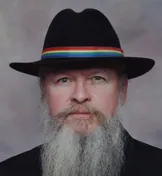
Mr. Roger Grattan in a Bnei Noah living in Bangor, Maine. He has organized several events for Bnei Noah, and works in raising awareness about the Bnei Noah movement, and distribution of associated materials. He was one of the people chosen to sit on the nascent Sanhedrin's original "High Council", an advisory board which has be largely inactive since September 2006. In 2007 he was appointed Emissary of the nascent Sanhedrin North American Affairs. He is also an Official UNC, Inc. Advisor.
According to the "Noahide Nations" website:[1]
Born in New York City, Roger Grattan completed 16 years of schools and college in the Catholic Tradition. Later participating with other denominations as well, questions of faith arose without satisfactory answer. Interested in the origins of his faith, a burning desire to know the truth accelerated in 1986 when he was re-reading Genesis 6:8 where the text reads: “And Noah found grace with God.”
His Traditional learning would have indicated that grace was only received from belief in New Testament teachings. Upon making inquiry of his clergyman as to the meaning of this verse, Mr. Grattan received another in a long line of less-than-satisfactory denominational answers. At that instance, Roger began to seek other sources of learning. A helpful clerk at a Jewish bookstore revealed the existence of a path to righteousness derived from believing as Noah did...though the clerk was unsure if there was anything written about it in English. Roger has been studying Torah and the Noahide Laws ever since.
Roger has been fortunate to attend many Dead Sea digs and has traveled to Israel a total of 10 times. He has been able to attend and assist at numerous conferences and symposia relating to the Rainbow Covenant and so, is proud to have been introduced to many key figures in Noahide circles.
Roger can sometimes be found playing the part of “ Father Noah,” a self-developed costume-clad character who roams crowds at street fairs, festivals, parades and the like. ‘Father Noah’ carries a long wooden staff while wearing a fabric garment printed with animal pairs and sporting a rainbow headdress. He role-plays Noah, ( often in the ‘second person’ ) while distributing literature on the Rainbow Covenant and the Seven Laws. Additionally, he carries a pocket-sized Torah and digest version of Hilcoth Melachim ( Laws of Kings - Maimonides) for those who are ‘more than curious.’
References
References and notes
- http://www.noahidenations.com/content/index.php?option=com_content&task=view&id=448&Itemid=38
Rokeiach
Rav Elazar Rokeiach of Worms, Germany was one of the Chassidei Ashkenaz, a group of German pietists. He lived from 1165 until 1238. His work, Sefer HaRokeiach is a guide to ethics and halacha. His teachers included, among others, Raavyah and the author of the Yereim, and among his students were Ramban and Rav Menachem Recanati.
Rules of participation
Here we should describe the rules of participation. The rules should be simple and below is a first attempt at formulating something.
- The intention is to collect all knowledge about the Bnei Noach movement
- Try to be as clear and concise as possible.
- Be organized, don't deviate from the topic of the page
- Please avoid speculating and giving personal opinion
- Bring authoritative opinions whenever possible
- Attacks on members of other Bnei Noach groups will not be tolerated.
The forum is not limited to just Jews or Bnai Noah, but it IS limited to:
- discussions about the Noahide movement (past, present and future)
- and scholarly sources that are respected by halachic Judaism.
This is not a forum for interfaith dialog.
Any post not conforming to the above rules of participation will be deleted.
Please note:
- If you don't want your writing to be edited mercilessly or redistributed by others, do not submit it.
- Only public domain resources can be copied without permission—this does not include most web pages.
- See our policies and guidelines for more information on editing.
Rules of translation participation
Here we should describe the rules of participation in translation. The rules should be simple and below is a first attempt at formulating something.
- The intention is to collect all information from the English Translation and then translate it into another language
- Maintain uniformitiy as the english
- Try to be as clear and concise as possible
- Be organized, don't deviate from the topic of the page
- Please avoid speculating and giving personal opinion
- Keep authoritative opinions whenever possible
Any post not conforming to the above rules of participation will be deleted.
Please note:
- If you don't want your writing to be edited mercilessly or redistributed by others, do not submit it.
- Only public domain resources can be copied without permission—this does not include most web pages.
- See our policies and guidelines for more information on editing.
Sacrilege
The act of profaning or violating sacred things. The prohibition of sacrilege was primarily in connection with the sanctuary (Lev. xix. 8, xxi. 23). The services in the Tabernacle or Temple could not be relegated to any one other than the priesthood (ib. xxxi. 17; Num. i. 51), nor could anything used in the sanctuary be appropriated for common purposes. Even the following for secular use of the formula of the sacrificial incense was prohibited (Ex. xxx. 32, 37). It was equally forbidden to copy the model of the Tabernacle or Temple,the candlestick, or any of the holy vessels; and the use of such vessels except in the sacred services was especially prohibited. If a man unintentionally committed a trespass on any of the sacred things or sacrifices he was required to make full restitution, with the addition of one-fifth of the amount of the damage, and to offer a sacrifice in expiation of the sin (Lev. v. 15, 16). Joshua consecrated the spoils of Jericho to the treasury of the sanctuary; and Achan, who committed a trespass in stealing some of them, suffered capital punishment (Josh. vi. 17, 24; vii. 20-25).
Tractate Me'ilah
The Talmud treatise Me'ilah explains the nature and details of trespass in regard to holy things. According to R. Akiba, any benefit derived from a sacred thing is punishable under the law of me'ilah. The h.akamim divide me'ilah into (1) benefits and (2) damages to the value of a perut.a (the smallest copper coin). Under this classification the use of gold vessels or ornaments of the sanctuary for profit is forbidden; but the use of garments or eatables is permitted provided they will not be damaged or consumed to the value of a perut.a (Me'i. v. 1). The amount of the profit or of the damage is to be paid in full with the addition of one-fifth; and a sacrifice worth two silver shekels must be offered for the sinful trespass ("asham me'ilah"). The law against sacrilege in the sanctuary applies to the sacred things pertaining to the sacrifices on the altar ("k.odshe mizbeah."), and to the sacred treasures and the material for repairing the sanctuary ("k.odshe bedek. ha-bayit"). For larceny of the Temple sacred vessel called "k.iswah" (bowl for libation), the culprit may, if caught in the act, be killed by zealots (Sanh. ix. 6, 81b; see Rashi ad loc.). This, however, is explained by Geiger as an exceptional punishment provided in the case of Sadducees, who opposed the water libation (see Suk. 48a). "One who profanes sacred things has no share in the world to come" (Ab. iii. 15).
The opinion prevails, however, that the law concerning sacrilege lapsed when the Temple was destroyed, and that it has no force in exilic times. It is not operative in the synagogue, which is considered merely as a charitable institution; and its infraction is liable to civil action only (Shulh.an 'Aruk, H.oshen Mishpat., 95, 1; 212, 8; Asheri, Responsa, rule 13, Nos. 1, 8). Nevertheless, the house of prayer or of learning may not be made a drinking-place, nor may it be commonly used as a conveniently short passageway ("compendiaria"; Ber. 62b). Scrolls of the Law that become unfit for reading, mantles of the Law, and covers of holy books (Meg. 26b), as well as all unused Hebrew manuscripts and torn leaves of printed books containing the name of G-d ("shemot") are placed in the genizah, it being considered sacrilege to make indiscriminate use of them.
Grave and Corpse.
The Rabbis extend the law of sacrilege to the cemetery, and prohibit the derivation of any benefit from a corpse, a coffin, a shroud, or a grave. No frivolity, feeding of cattle, picking of flowers, or cutting of trees is permitted in the cemetery, nor may a canal for the purposes of irrigation be run through it (Meg. 29a). The disinterment of a body, except under certain conditions and regulations, is prohibited. Wood, straw, or other merchandise may not be stored in the cemetery (Shulh.an 'Aruk, Yoreh De'ah, 361, 364, 368).
Contempt of Scripture.
Another sort of sacrilege is the bringing into contempt of things that are holy. The first record of such a sacrilegious act is that of Esau selling his birthright (Gen. xxv. 33). The literary misuse of the Holy Scriptures is sacrilege: "No one may recite the Song of Solomon as he would secular poetry, or quote verses at inappropriate times or in drinking-places. When this occurs the Torah laments and complains before the Almighty, saying: 'Master of the world! Thy children have made a lyre of me for the amusement of the scorners'" (Sanh. 101a). Imitation of the style of the Bible or even of the Talmud was looked upon as sacrilege. Moses H.ayyim Luzzatto was censured for such an act of sacrilege. It is claimed that he composed 150 psalms in the style of the Book of Psalms, and that he did not dare publish them for fear of incurring from the Jewish community a charge of contempt (F. Delitzsch, "Zur Gesch. des Ju"dischen Poesie," p. 90, Leipsic, 1836; "Toledot M. H.. Luzzatto," Lemberg, 1879); at any rate two such psalms by him appeared in print (in "Bikkure ha-'Ittim," 1827, vii. 99). In 1863 M. L. Lilienblum composed "Massa' Polin," a poem against the Polish revolt, with vowels and accents in the style of the Scriptures, which style of imitation was condemned by the Rabbis ("H.at.t.e'ot Ne'urim," pp. 45, 48, 69, Vienna, 1876). The Talmudic imitation of Masseket Kelim by Rabbi Gershon Enoch Henach was censured and its sale forbidden by the rabbinate of Wilna because in form and style the book resembled the ordinary Gemara. It was sacrilege, the Rabbis claimed, to put the work of Rabina and R. Ashi on a level with the work of a latter-day rabbi ("Ha-Maggid," xix. [1875], Nos. 32, 33; "Ha-Lebanon," xi., No. 34; Hillel Noah Steinschneider, "'Ir Wilna," p. 60, Wilna, 1900).
Sefer HaChassidim
Rav Yehuda HaChassid was another member of the German pietists. He was born in Speyer (Shapira) in 1150 and died in Regensburg in 1217. Although he was a Tosafist, this work of his is his best known. It is a collection of short thoughts, ideas, and pieces of advice on virtually every area of Jewish life. Many of these notes are based on Kabbalah rather than halacha. He received much of his knowledge from his father, Rav Shmuel HaChassid, and he taught luminaries such as the authors of the Or Zarua and Semag.
Sefirot
Sephirah, also Sefirah (Hebrew language ספירה Enumeration); plural Sephiroth or Sefiroth ספירות.
In the Kabbalah, the Sephiroth (or Enumerations) are the ten Divine Emanations of G-d (or infinite light: Ein Sof Aur) into the universe. These emanations manifest not only in the physical part of the universe, but also in the metaphysical one. Kabbalah distinguish four different worlds or planes: Atziluth (אֲצִילוּת), or World of Emanations, where the Divine Archetypes live; Beriah (בְּרִיאָה) or World of Creations), where Highest Ranking Angels are; [[Yetzirah (יְצִירָה) or World of Formations is the astral world; and Asiyah (עֲשִׂיָּה) or World of Actions, is the physical plane and "low astral" plane. Each of these worlds are progressively grosser and denser, but the ten Divine Sephiroth manifest in all of them.
The Sefirot constitute the tree of life, and are aligned in three columns, each headed by a Supernal.
The names of the Sefirot are:
- Kether (Crown; כתר)
- Chochmah (Wisdom; חכמה)
- Binah (Understanding; בינה)
- Chesed (Mercy; חסד)
- Gevurah (Severity; גבורה)
- Tiphareth (Redeemer; תיפארת)
- Netzach (Victory; נצח)
- Hod (Majesty; הוד)
- Yesod (Foundation; יסוד)
- Malkhuth (Kingdom; מלכות)
Occasionally another is enumerated: Da'at (Knowledge; דעת)
Semak
Sefer Mitzvot Katan, so-called due to its being briefer than Rav Moshe of Coucy's Sefer Mitzvot Gadol, lists the commandments applicable in the post-Temple era, analyzing them and sometimes offering halachic rulings concerning them. It is divided into seven sections corresponding to the seven days of the week, so as to encourage the weekly review of the book. He was the son-in-law and student of Rav Yechiel of Paris and of Shmuel and Moshe of Evreux, and was the teacher of Rabbeinu Peretz.
Terry Lanham
Director of Chavurath B’nai Noach Fort Worth, Texas
Test
Test Page
The Three Hares
Three Hares
The Three Hares is a symbol that is found Hare
Theodor Herzl
Theodor Herzl The term "Zionism" was first introduced in 1893 by Nathan Birmbaum, but Theodor Herzl, an Austrian Jew born to a prosperous, emancipated Budapest family, is recognized as the founder of the Zionist idealogy when he published his book in 1896, "The Jewish State", where he declared that the cure for anti-semitism was the establishment of a Jewish state. As he saw it, the best place to establish this state was in Palestine.
While Herzl claimed that the establishment of a "Jewish" state would cure anti-Semitism, he also promoted anti-Semitism to further his cause.
Herzl stated in his diary:
"It is essential that the sufferings of Jews.. . become worse. . . this will assist in realization of our plans. . .I have an excellent idea. . . I shall induce anti-Semites to liquidate Jewish wealth. . . The anti-Semites will assist us thereby in that they will strengthen the persecution and oppression of Jews. The anti-Semites shall be our best friends". (From his Diary, Part I, pp. 16)
Benny Morris (the Israeli Historian), described how Herzl foresaw how anti-Semitism could be "HARNESSED" for the realization of Zionism. He stated:
"Herzl regarded Zionism's triumph as inevitable, not only because life in Europe was ever more untenable for Jews, but also because it was in Europe's interests to rid the Jews and relieved of anti-Semitism: The European political establishment would eventually be persuaded to promote Zionism. Herzl recognized that anti-Semitism would be HARNESSED to his own--Zionist-purposes." (Righteous Victims, p. 21)
TOG
Torah Observant Goy
Tree of Life
See Sefirot and Divine Emanations
Tur
After Mishne Torah, the next major halachic code was Rav Yaakov the son of Asher's Rosh Arba'ah Turim (lit. "four pillars"). He dealt only with the laws that are still relevant, and divided them into four major sections: Orach Chayim, dealing with the daily laws and laws of Shabbat and holidays, Yoreh De'ah, dealing with laws of kashrut, mourning, and ''niddah, Even ]]HaEzer,'' dealing with women's issues such as marriage and divorce, and ''Choshen Mishpat,'' which deals with the civil code. These divisions became the standards for many later works, and this work remains as the standard source-text for halachic discussions. In addition, he also wrote a brief commentary on the Torah, known as ''Ba'alHaTurim,'' which focuses on gematria, as well as a longer commentary. He studied under his father, and was the teacher of [[Abudraham.
Tur was also the name of one of the three sons of Fereydoun (Persian Noah).
Vayoel Moshe 2
Written by Satmar Grand Rebbe Joel Teitelbaum, zt'l Section 139, Vayoel Moshe, Part II (published in 1961)
The Zionists have constantly fomented hatred of Jews around the world in order to strengthen their ideology of creating and maintaining their state, which is the most dangerous place in the world for the Jewish People
The entire goal of the Zionists in bringing Jews to the Holy Land has been to place the Jewish People under their control in order to uproot them from their Jewish faith. The Zionists have committed many terrible acts to accomplish this purpose. When the heretic Herzl invented his ideology of Zionism and a “Jewish” state, his supporters embarked on a huge campaign of libel and slander against the Jewish People before the other nations of the world so as to enhance anti-Jewish feelings and enable those nations to expel their Jewish citizens. The Zionists wrote articles about this, as did the newspapers of the day. The entire campaign was designed to coerce Jews into moving to the Holy Land to enable the Zionists to accomplish their nefarious goals.
The heretic Herzl wrote in his own abominable diary that increasing anti-Semitism would be of great help to his movement. The great rabbis of the generation were terrified of the horrific libel and slander undertaken by the Zionists that would ultimately result in hatred of the Jewish People. They even stated that the fact that the Zionists embarked on their awful slander against the Jewish People before other nations would require a great miracle to prevent those nations from destroying the Jewish People as a result of the horrific slander and libel of the Zionists whose acts were like the penetration of sharp swords against the Jews. Unfortunately we did not merit such a miracle, and their actions bore fruit. We all know what occurred, and we have still not repented of the error, may G-d have mercy. These facts are widely known, and this is not the place to discuss them in detail – a separate book would be required to do so. I simply bring up the issue to point out how bad things have become for the Jewish People, how vulnerable we have become because of that ideology to transfer the entire Jewish People to the Holy Land.
The Zionists have used events to blind the eyes and confuse people’s minds into thinking that the establishment of their state in the Holy Land is some kind of worthy religious precept. The heretics and apostates want everyone to believe that the love of the Holy Land simply covers over all their sins. They constantly seek to dress up all the evil deeds they commit against the Jewish People spiritually and physically in the garment of the holiness of the Holy Land.
This is how Jews from many countries such as Yemen, Morocco, Iraq and other lands of the Sephardic Jews, as well as numerous Ashkenazim who were G-d-fearing and faithful to Judaism were fooled into moving to the Holy Land, thinking they were fulfilling the greatest of religious precepts that outweighed the entirety of the Torah itself. Of course none of this would be practical or possible without sources of money, housing and employment. Sadly, supporters of Zionism made this possible; there are leaders who in various ways are aiding and abetting the Zionists. Even after they start to realize their evil and bitter fate in falling into the trap of the Zionists without anyone to rescue them, the poor Jewish immigrants would never have believed that this terrible enemy would await them at the gates of Jerusalem under the guise of living Jewishly in the Holy Land, and are blinded by it.
The “religious” parties who are follow along with the Zionists magnify the so-called religious precept of living in the Holy Land under the Zionist regime in violation of the Jewish religion before the entire world in order to pander to the Zionists, thereby strengthening Satan to draw the Jewish People closer to Zionism. View Source
Yazdânism
Yazdânism or Cult of Angels (also Yazdâni or Yazdanism) is a modern term for the monotheistic, though universalist, religion that was practiced by most Kurds up to the Islamisation during the sixteenth century. Yazdânism involved a belief in incarnation as well as 7 angelic beings which defend the world from their equal and opposite number. In Kurdistan a fair estimate still claims Yazdanists being close to one third of the population. They are the Sabians of Harran described in Maimonides' Guide for the Perplexed and mentioned in Bahá'í writings and in the Qur'an as Sabeans. The name Yazdânism derives from the Persian language word Yazdân, or E-zad, meaning god .
History
Yazdânism may have once been known as Hâk or Haq, in reference to the primary deity or "universal spirit". Long interaction between Zoroastrianism and Yazdânism has left many similarities between the two religions.http://essenes.net/yazdanism.html
This religion is known as "RAE HAQ" (Way of Truth).
Today
Today Yazdânism is split into three branches:
- Alevism (northwestern Kurdistan, Turkey and the Syrian coast)
- Yarsani (southernmost part of Kurdistan, western Iran)
- Yazidi (central Kurdistan).
Mutual exchange and contacts between these branches are infrequent and members of the three groups are often not aware of their origins.
References
Mehrdad R. Izady, The Kurds A Concise Handbook, (1992) Taylor & Francis Group. ISBN 0-8448-1727-9 (also at Crane Russak. ISBN 0-8448-1729-5 )
See also
- Mandaeanism
- Manicheism
- Mazdakism
- Zoroastrianism
- Indo-Iranian religion
- Indo-European religion
External links
- Yazdanism, Encyclopaedia of the Orient
- Daniel Bart in Kurdistan (2003)
- Yazdânism: Cult of Angels
Yehudah Halevi
View on Noahides
Main article Judaism and Other Religions
Yehuda Halevi lived in the twelfth century, heir to Spanish philosophical and poetic traditions. He wrote a defense of Judaism, called the Treatise in Defense of a Despised Tradition, popularly known as The Kuzari. The work has been popular over the centuries and is still read today by students seeking a guide to basics of Jewish theology.
Israel among the nations is like a heart among the organs of the body. It is the healthiest, as well as the one most prone to disease. As the verse [Amos 3:2] states, "Only you have I known from all of the families of the earth; therefore shall I punish you for your iniquities.” (Kuzari II:36)
Similarly, all religions that came after the Torah of Moses are part of the process of bringing humanity closer to the essence of Judaism, even through they appear its opposite. The nations serve to introduce and pave the way for the long-awaited messiah. He is the fruit and they, in turn, will all become his fruit when they acknowledge him. Then all nations will become one tree, recognizing the common root they had previously scorned. (Kuzari IV:23)
For Yehudah Halevi, Israel is a chosen people, who transform the world. Other religions share a common root of Judaism; all religions are of the same tree with Judaism as the trunk.[9] The religions are not needed for Jewish self-understanding, but to fail to recognize the nature of the branch religions is to fail to properly understand the world and, in effect, God’s providential plan.
Many misread Yehudah Halevi's position as teaching the uniqueness of Judaism and the corollary falseness of other religions; we are true and they are wrong. However, as the above passage shows, the correct reading is that the other religions are only limbs on the trunk of Judaism. Even Halevi's limiting of prophecy to Judaism does not preclude the availability of some form of revelation for all. The book itself opens with a story of a king getting inspiration from God through a true dream and thereby coming to learn of the higher Mosaic revelation.[10]
While I dealt with Yehudah Halevi, some of the same sentiments are found in Maimonides' writings, embedded within a more theologically contradictory halakhic grid. The complexity of Maimonides' position is beyond the scope of this paper.
Yereim
Rav Eliezer from Metz, France, one of the Tosafists, wrote this work on the 613 commandments. He lived from 1115 until 1198 and was a student of fellow Tosafist Rabbeinu Tam. This work categorizes the 613 commandments into 7 main groups, and discourses on each one, incorporating Talmudic and halachic discussions. His students included Raavyah and Rokeiach.
Zevi Yehudah Kook
View on Noahides
Main article Judaism and Other Religions
Zevi Yehudah Kook was the son of Rav Kook, he was blessed with a long life and many students. His ideology makes him the father of the settler movement and therefore influential in late twentieth-century Israeli political life.
The fruit of Zevi Yehudah Kook’s exclusivist ideology can be seen in the conflict his students have caused and embraced with the Palestinians. The ideology itself is noteworthy for a staunch anti-Christianity that culls two millennia of sources without acknowledging any of the countervailing traditions. For Zevi Yehudah Kook, the attack on Christianity is motivated by the conflict with the wider Western culture which both threatens the Jewish purity of Israel from within and opposes his messianic settlement drive from without. Until now, none of his writings on Christianity have been translated into English; because I do not want to be his first translator, I am presenting his views in summary only.
Zevi Yehudah Kook resurrects many of the classic anti-Christian polemics with a vigor not seen for centuries. Among them: Christianity should be dismissed as an internal Jewish heresy; God the creator clearly cannot be a man; the Jewish God is alive whereas the Christian’s is dead. Christianity is the refuse of Israel, in line with the ancient Talmudic portrayals of Jesus as boiling in excrement.[14]
If asked: What about the many arguments that, despite the falsity of Christian truth claims, the religion still constitutes a path to God? Like Wahabi Fundamentalism within Islam, Zevi Yehudah denies the continuous relevance of the cosmopolitan ages of synthesis, choosing instead to return to the polemical Midrash and Maharal.
Why was his position formulated at the end of the twentieth century? His theology shows the change that comes about from living in a non-Diaspora context that enables this rejection of western culture. The state of Israel can lead to a secure acceptance of the other, especially other religions, or it can also allow for a complete xenophobic rejection.